
One Institute, Two Sciences, One Mission
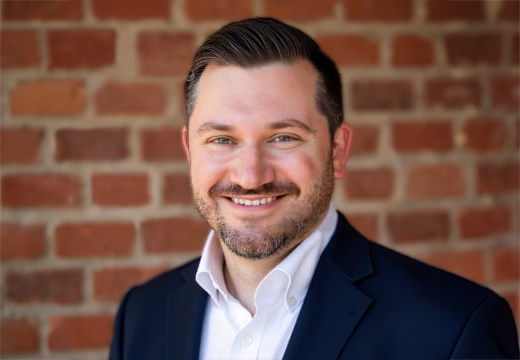
I have spent my career on the operant side of behavioral economics, studying how people allocate their behavior, discount the future, and respond as the price of a reinforcer rises. What drew me to Institutes for Behavior Resources, Inc. (IBR) was not the fatigue science itself, but rather, the lineage behind it. Our company was founded in 1960 by Dr. Joseph V. Brady, who carried B.F. Skinner's operant methods out of the laboratory and into real human problems. The SAFTE model behind SAFTE-FAST was built by my predecessor, Dr. Steven Hursh, who is the father of operant behavioral economics. The same institute, and in Dr. Hursh’s case the same scientist, produced both a world-leading fatigue model and a foundation of my own field.

My Vision for IBR
Our mission at IBR is to enhance the behavioral sciences and their application to human affairs, through research, clinical services, consulting, and education. What makes IBR unusual is that it already houses both a behavioral economics program and an operational fatigue and performance program, and for most of its history, the two have run alongside each other rather than together. As the new President, my vision is to leverage these programs as our central advantage. The science of how people value outcomes, weigh delays, and respond to reinforcement is the same science that decides whether a fatigue model ever changes what happens at 3:00 AM when a shift worker’s alarm goes off. I did not come to IBR to keep those two programs politely separate; rather, I came to put them to work on each other.
What a Model Can and Cannot Do
A good fatigue model does something difficult: it tells you where and when risk will appear before it does, and SAFTE-FAST does so with an accuracy validated against psychomotor performance and years of accident data. What no model can do is take the next step for you. The roster still has to be rebuilt, the policy still has to change, and the tired crew member still has to sleep during the window the model found. Prediction gets you to the point of decision. Everything after that depends on an intentional analysis of behavior.
The Role of Behavioral Economics
That is where behavioral economics—the other scientific arm for which IBR is internationally known—earns its keep, and it shows up in three questions. The first is whether people will use the rest they are given. Sleep pays off later, while the phone and the drive home pay off now. After years of studying delay discounting, I can confidently say that sleep is almost a caricature of the problem we study. Fatigue makes it worse by dulling the judgment we would use to catch it, so people grow more impaired while feeling much the same, even though a long enough stretch awake rivals the legal alcohol limit. An objective model matters precisely because it is a second opinion a tired brain cannot argue away.
The second is whether people will report fatigue honestly. Reporting usually costs something, whether a lost trip, a schedule change, or an awkward conversation, and behavior that carries a cost happens less often. In one survey of 794 crew, 81.7 percent admitted operating while fatigued and yet 73.2 percent had never filed a report. If reinforcement shapes decisions among the public and among experts alike, it certainly shapes a tired scheduler weighing whether a report is worth the trouble. A real just culture is the applied work of making honesty the better-reinforced choice, and it is one of the best data-quality investments an operator can make. The third is whether the people who build schedules act on the model’s recommendations. Feedback improves performance reliably only when it is paired with real consequences, and defaults do much of the work once the preferred option is made the easy one, as opt-out organ donation has shown at the national level. If I had to reduce all of this to a single rule, it would be to fix the schedule first and support the worker second, because fatigue is, above all, a systems problem, and the schedule is the largest lever an organization controls. Whatever we build around sleep should rest on measured sleep rather than assumptions, and it should stay voluntary.
Of course, to achieve these scientific goals and transfer the insights into a commercial product, we need a team of experts: behavioral scientists, fatigue scientists, and strategic business leadership. What makes IBR truly special is that we already have all three under one roof.
The People Who Will Do This Work
A vision is only as sound as the people carrying it, and for that I am fortunate. Our Chief Sleep Scientist, Dr. Jaime Devine, is a major reason I am confident this integration will be real rather than rhetorical. She is a recognized expert on sleep in operational populations and on using wearable technology to measure it rigorously in the field. This is exactly what lets us build on what people actually do rather than on what we assume. With Dr. Devine at the helm of our sleep science, the fatigue half of this work is in excellent hands. I am also pleased to announce Murray McGrath's promotion to Executive Director, SAFTE-FAST. In this senior role, he will provide strategic leadership, work with IBR’s leadership to turn priorities into action, oversee operations, and help shape long-term strategy to adapt to evolving customer needs, industry changes, and new technologies.
The Work Ahead
SAFTE-FAST tells you where fatigue risk lies. It leverages science trusted across regulated and safety-critical operations. Behavioral economics is what turns that knowledge into the decisions that move it. Bringing those capabilities together and backing them with people like Dr. Devine and Murray is how I intend to honor what IBR has always stood for and continue Dr. Brady’s and Dr. Hursh’s legacies: enhancing the behavioral sciences and putting them to work in human affairs.
Derek D. Reed, Ph.D., BCBA-D
President and Chief Behavioral Scientist, Institutes for Behavior Resources, Inc.


Comments